NAA

National Archives Australia

Tracked since 11 Nov 2025 · 4 revisions (3 changes) · last change 1 May 2026

How to read this

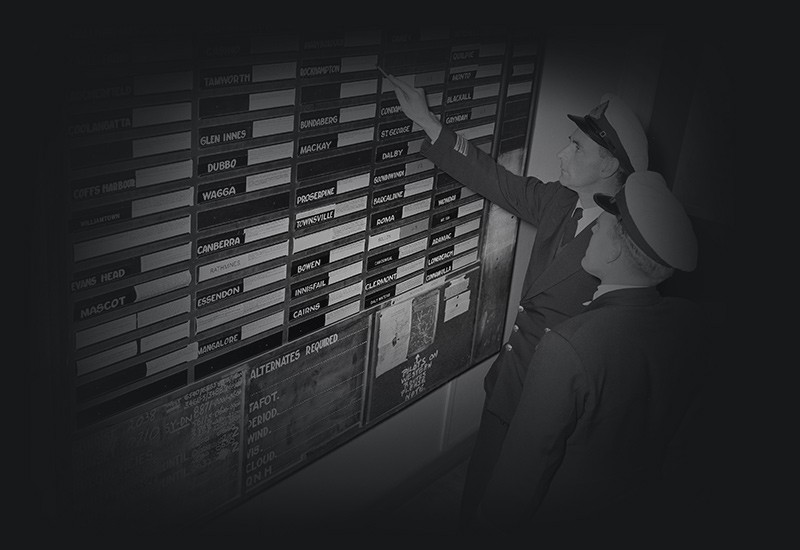
Arrivals and departures board, Brisbane airport, 1954

Artificial Intelligence (AI) transparency statement (Shared with 18 other agencies)

The Digital Transformation Agency's Policy for the responsible use of AI in government sets out the Australian Government approach to embrace the opportunities of AI and provide for safe and responsible use of AI. Transparency is critical to building public trust and is an important aim of the policy and broader APS Reform agenda. (Template language)

National Archives is dedicated to ongoing refinement and enhancement of our AI capabilities. We will be transparent as we enable and prepare, engage, monitor, adopt, review, evolve, integrate and pivot to changes in AI, the technology environment and Government policy requirements.

Chief Artificial Intelligence Officer (Shared with 1 other agency)

The National Archive' Assistant Director-General Technology is the Chief Artificial Intelligence Officer, responsible for leading organisational change and innovation, accelerating AI capability development and identifying opportunities for AI to enhance efficiency, policy and resource allocation.

The National Archives' Chief Information and Data Governance Officer is the accountable official for Artificial Intelligence within Archives, including implementation of Australian Government policy requirements. This includes ensuring National Archives is positioned for monitoring, measurement and capability development with AI. Central to this is a strong approach to governance, seeking to balance a culture of risk management with innovation. (Template language)

The National Archives Access to publicly available Artificial Intelligence policy , outlines our principles, our risk tolerance, and the approval process for business use of publicly available AI. The Archives uses the Information and Data Governance Committee (IDGC) for consideration of AI business cases.

National Archives has processes to ensure that our:

  • AI access and use is appropriately governed and monitored – AI tools and users are registered
  • engagement with AI is confident, safe and responsible – AI tools are Cyber assessed and staff are trained
  • staff have the knowledge and capability to use AI appropriately – mandatory AI training is implemented
  • stakeholders have trust in our use of AI – all use of AI is declared, and
  • risks are identified and addressed – all specific business use cases include risk and ethics assessments.

AI use by National Archives according to usage patterns and domains

National Archives is using AI only in the corporate and enabling domain, focussing on refining ways of working and trialling AI functionality that enhances archival processes. We do not use AI in any decision-making processes or public interaction, and all possible efforts are taken to protect the public against negative impacts.

The primary use cases for internal AI relate to:

  • open access document text summarisation
  • transcription and content extraction
  • description extraction and enhancement
  • text review and refinement.

This AI use is supported by business cases that seek to improve processes or productivity. This includes general staff access to approved AI tools. Internal measures have been put in place to mitigate risk and monitor effectiveness.

This statement will be reviewed annually, when making a significant change to our approach to AI, or when any new factors impact this statement.

For further enquiries, contact us through our online contact form.

Authorised by:
Assistant Director-General, Technology
7 January 2026

Statement text © National Archives Australia, reproduced for transparency tracking (most agency content is CC BY 4.0 — check the original for specifics).

Revision history

  1. updated -24
    View diff
    ![Arrivals and departures board, Brisbane airport, 1954](https://www.naa.gov.au/sites/default/files/styles/banner_image_general/public/2020-03/accountability-reporting-banner-std-7534887.jpg?itok=slC9n1a1) # Artificial Intelligence (AI) transparency statement The Digital Transformation Agency's [_Policy for the responsible use of AI in government_](https://www.digital.gov.au/sites/default/files/documents/2024-08/Policy%20for%20the%20responsible%20use%20of%20AI%20in%20government%20v1.1.pdf) sets out the Australian Government approach to embrace the opportunities of AI and provide for safe and responsible use of AI. Transparency is critical to building public trust and is an important aim of the policy and broader APS Reform agenda. National Archives is dedicated to ongoing refinement and enhancement of our AI capabilities. We will be transparent as we enable and prepare, engage, monitor, adopt, review, evolve, integrate and pivot to changes in AI, the technology environment and Government policy requirements. ## Chief Artificial Intelligence Officer The National Archive' Assistant Director-General Technology is the Chief Artificial Intelligence Officer, responsible for leading organisational change and innovation, accelerating AI capability development and identifying opportunities for AI to enhance efficiency, policy and resource allocation. ## Accountable Official The National Archives' Chief Information and Data Governance Officer is the accountable official for Artificial Intelligence within Archives, including implementation of Australian Government policy requirements. This includes ensuring National Archives is positioned for monitoring, measurement and capability development with AI. Central to this is a strong approach to governance, seeking to balance a culture of risk management with innovation. ## Governance The National Archives _Access to publicly available Artificial Intelligence policy_ , outlines our principles, our risk tolerance, and the approval process for business use of publicly available AI. The Archives uses the Information and Data Governance Committee (IDGC) for consideration of AI business cases. National Archives has processes to ensure that our: *- AI access and use is appropriately governed and monitored – AI tools and users are registered *- engagement with AI is confident, safe and responsible – AI tools are Cyber assessed and staff are trained *- staff have the knowledge and capability to use AI appropriately – mandatory AI training is implemented *- stakeholders have trust in our use of AI – all use of AI is declared, and *- risks are identified and addressed – all specific business use cases include risk and ethics assessments. ## AI use by National Archives according to usage patterns and domains National Archives is using AI only in the corporate and enabling domain, focussing on refining ways of working and trialling AI functionality that enhances archival processes. We do not use AI in any decision-making processes or public interaction, and all possible efforts are taken to protect the public against negative impacts. The primary use cases for internal AI relate to: *- open access document text summarisation *- transcription and content extraction *- description extraction and enhancement *- ideation, and *- text review and refinement. This AI use is supported by business cases that seek to improve processes or productivity. This includes general staff access to approved AI tools. Internal measures have been put in place to mitigate risk and monitor effectiveness. ## Review This statement will be reviewed annually, when making a significant change to our approach to AI, or when any new factors impact this statement. For further enquiries, contact us through our [online contact form](https://www.naa.gov.au/visit-us/contact-us#email-us). ## Authorisation Authorised by: \ Assistant Director-General, Technology \ 7 January 2026
  2. updated +802
    View diff
    ![Arrivals and departures board, Brisbane airport, 1954](https://www.naa.gov.au/sites/default/files/styles/banner_image_general/public/2020-03/accountability-reporting-banner-std-7534887.jpg?itok=slC9n1a1) # Artificial Intelligence (AI) transparency statement The Digital Transformation Agency's [_Policy for the responsible use of AI in government_](https://www.digital.gov.au/sites/default/files/documents/2024-08/Policy%20for%20the%20responsible%20use%20of%20AI%20in%20government%20v1.1.pdf) sets out the Australian Government approach to embrace the opportunities of AI and provide for safe and responsible use of AI. Transparency is critical to building public trust and is an important aim of the policy and broader APS Reform agenda. National Archives of Australia (National Archives) is dedicated to ongoing refinement and enhancement of our AI capabilities. We will be transparent as we enable and prepare, engage, monitor, adopt, review, evolve, integrate and pivot to changes in AI, the technology environment and Government policy requirements. ## AccountableChief OfficialArtificial Intelligence Officer The National Archives’Archive' Assistant Director-General, Technology is the Chief Artificial Intelligence Officer, asresponsible for leading organisational change and innovation, accelerating AI capability development and identifying opportunities for AI to enhance efficiency, policy and resource allocation. ## Accountable Official The National Archives' Chief Information and Data Governance Officer, is the accountable official for Artificial Intelligence within Archives, including implementation of Australian Government policy requirements. This includes ensuring National Archives is positioned for monitoring, measurement and capability development with AI. Central to this is a strong approach to governance, seeking to balance a culture of risk management with innovation. ## Governance The National Archives _Access to publicly available AI (Artificial Intelligence) frompolicy_ NAA systems_ , outlines our principles, our risk tolerance, and the approval process for business use of publicly available AI. The Archives seeksuses to leverage our existing governance bodies and utilises the Information and Data Governance Committee (IDGC) for consideration of AI business cases. National Archives has processes to ensure that our: * our AI access and use is appropriately governed and monitored – AI tools and users are registered * our engagement with AI is confident, safe and responsible – AI tools are Cyber assessed and staff are trained * ourstaff have the knowledge and capability to use AI appropriately – mandatory AI training is implemented * stakeholders have trust in our use of AI – all use of AI is declared, and * our risks are identified and addressed * our AIall accessspecific andbusiness usageuse iscases monitoredinclude risk and ethics assessments. ## Use of AI use by National Archives according to usage patterns and domains National Archives is using AI internallyonly in athe limitedcorporate fashionand forenabling business purposesdomain, focussing on pilots refining ways of working and trialling AI functionality that enhances archival processes. We do not use AI in any externaldecision-making servicesprocesses or advicepublic weinteraction, provideand all possible efforts are taken to protect the public. against negative impacts. The primary use cases for internal AI adoption centre relate to: * open access document text summarisation * ideationtranscription and content extraction * reviewdescription ofextraction non-sensitiveand outputs.enhancement * ideation, and ## * Reviewtext review and refinement. TheThis NationalAI Archivesuse willis continuesupported toby updatebusiness thiscases transparencythat statementseek to reflectimprove implementationprocesses andor adoptionproductivity. ofThis includes general staff access to approved AI technologytools. Internal measures have been put in place to mitigate risk and monitor effectiveness. ## Review This statement will be reviewed annually, when making a significant change to our approach to AI, or when any new factors impact this statement. For further enquiries, pleasecontact us through our [online contact usform](https://www.naa.gov.au/visit-us/contact-us#email-us). ## Authorisation Authorised by: Assistant Director-General, Technology Chief7 InformationJanuary Officer Chief Information Security Officer 2 July 20252026
  3. updated -332
    View diff
    ![Arrivals and departures board, Brisbane airport, 1954](https://www.naa.gov.au/sites/default/files/styles/banner_image_general/public/2020-03/accountability-reporting-banner-std-7534887.jpg?itok=slC9n1a1) ## Breadcrumb 1. [Home](https://www.naa.gov.au/) 2. [About us](https://www.naa.gov.au/about-us) 3. [Who we are ](https://www.naa.gov.au/about-us/who-we-are) 4. [Accountability and reporting](https://www.naa.gov.au/about-us/who-we-are/accountability-and-reporting) 5. Artificial Intelligence (AI) transparency statement # Artificial Intelligence (AI) transparency statement The Digital Transformation Agency's [_Policy for the responsible use of AI in government_](https://www.digital.gov.au/sites/default/files/documents/2024-08/Policy%20for%20the%20responsible%20use%20of%20AI%20in%20government%20v1.1.pdf) sets out the Australian Government approach to embrace the opportunities of AI and provide for safe and responsible use of AI. Transparency is critical to building public trust and is an important aim of the policy and broader APS Reform agenda. National Archives of Australia (National Archives) is dedicated to ongoing refinement and enhancement of our AI capabilities. We will be transparent as we enable and prepare, engage, monitor, adopt, review, evolve, integrate and pivot to changes in AI, the technology environment and Government policy requirements. ## Accountable Official The National Archives’ Assistant Director-General, Technology, as Chief Information Officer, is the accountable official for Artificial Intelligence within Archives, including implementation of Australian Government policy requirements. This includes ensuring National Archives is positioned for monitoring, measurement and capability development with AI. Central to this is a strong approach to governance, seeking to balance a culture of risk management with innovation. ## Governance The National Archives _Access to publicly available AI (Artificial Intelligence) from NAA systems_ , outlines our principles, our risk tolerance, and the approval process for business use of publicly available AI. The Archives seeks to leverage our existing governance bodies and utilises the Information and Data Governance Committee (IDGC) for consideration of AI business cases. National Archives has processes to ensure: * our AI use is appropriately governed * our engagement with AI is confident, safe and responsible * our stakeholders have trust in our use of AI * our risks are identified and addressed * our AI access and usage is monitored. ## Use of AI by National Archives National Archives is using AI internally in a limited fashion for business purposes, focussing on pilots refining ways of working. We do not use AI in any external services or advice we provide to the public. The primary use cases for internal AI adoption centre relate to: * text summarisation * ideation * review of non-sensitive outputs. ## Review The National Archives will continue to update this transparency statement to reflect implementation and adoption of AI technology. This statement will be reviewed annually, when making a significant change to our approach to AI, or when any new factors impact this statement. For further enquiries, please [contact us](https://www.naa.gov.au/visit-us/contact-us#email-us). ## Authorisation Authorised by: Assistant Director-General, Technology Chief Information Officer Chief Information Security Officer 2 July 2025
  4. first tracked +3498

    First tracked revision.